HR & Labor Compliance
How to Defend an Unemployment Claim
Key takeaways
- How to Defend an Unemployment Claim is essential for operators who need defensible records—not memory.
- Build the file with the restaurant employee documentation checklist and how to write up an employee.
- If the claim is charged, price the tax with the unemployment claim cost calculator.
- Managers delay documentation because the floor is busy, tools are fragmented, and teams fear "building a case.
- " The result: empty files, sudden terminations, and lost claims.
- Poor documentation creates MOD inconsistency, invisible patterns across stores, and hours of HR reconstruction before any serious conversation.
Introduction
How to Defend an Unemployment Claim is essential for operators who need defensible records—not memory. This guide walks through problem definition, operational impact, legal risk, and step-by-step actions you can use this week. Build the file with the restaurant employee documentation checklist and how to write up an employee. If the claim is charged, price the tax with the unemployment claim cost calculator.
Problem Definition
Managers delay documentation because the floor is busy, tools are fragmented, and teams fear "building a case." The result: empty files, sudden terminations, and lost claims.
Operational Impact
Poor documentation creates MOD inconsistency, invisible patterns across stores, and hours of HR reconstruction before any serious conversation.
Legal Risk
Without contemporaneous notes, employers struggle to prove policy awareness, progressive coaching, and consistent enforcement. For a restaurant, the pack a hearing officer actually reads—cover timeline, dated steps, acknowledged policy, schedule and POS exports—is assembled in restaurant unemployment claim documentation.
Best Practices
- Document observable behavior, not personality
- Cite handbook sections
- Capture same shift
- Include witnesses when available
- Set follow-up dates
Step-by-Step Guidance
- Identify the trigger event — What happened, when, where?
- Record facts immediately — Voice note or structured form on floor
- Reference policy — Which expectation was not met?
- State action taken — Coaching, warning, suspension, etc.
- Schedule follow-up — Date and metric for improvement
- Store in official file — Not personal phone or group chat
Most of this work happens before any notice arrives. Restaurant termination documentation covers the file review to run before the decision and the same-day separation summary that lists each prior step by date.
Common Mistakes
- Vague language ("bad attitude")
- Delayed entries after memories conflict
- Missing progressive steps
- Inconsistent standards between employees
Conclusion
How to Defend an Unemployment Claim protects your business and fair employees. Docu-Coach™ makes each step faster with voice capture and structured records. Book a demo to see the workflow.
Frequently Asked Questions
What is How to Defend an Unemployment Claim?
How to Defend an Unemployment Claim is the practice of creating contemporaneous, structured records of employee incidents, coaching, discipline, and HR actions so operators can defend decisions and reduce legal risk.
Why do restaurants and hospitality operators need dedicated documentation software?
Paper files, texts, and shared folders fail during rush periods and unemployment hearings. Purpose-built tools enforce consistent fields, timestamps, and audit trails.
Does Docu-Coach™ replace our HRIS or payroll system?
No. Docu-Coach™ is the documentation layer—incidents, coaching, write-ups, and personnel file entries—complementing payroll and core HR systems.
How quickly should managers document incidents?
Same shift, ideally within minutes. Docu-Coach™ enables 10-second voice capture on the floor before details fade.
Can multi-unit operators standardize documentation across locations?
Yes. Docu-Coach™ enforces consistent record types, required fields, and searchable roll-up views for area directors and HR.
How does better documentation help with unemployment claims?
Contemporaneous records show the employee knew expectations, received coaching, and was treated consistently—key factors in claim defense.
What belongs in an employee personnel file?
Hire paperwork, handbook acknowledgment, dated incident and coaching entries, attendance patterns, investigation notes, and progressive discipline steps.
How do I see Docu-Coach™ in action?
Book a demo at docu-coach.com/demo or email hello@docu-coach.com for a 30-day trial walkthrough.
Related Resources
Restaurant Employee Documentation Checklist
Same-shift restaurant employee documentation checklist for FOH, BOH, attendance, alcohol, cash, and guest complaints—so a write-up or unemployment file is ready before Saturday brunch.
9 min read · September 2026
How to Write Up an Employee
How to Write Up an Employee for operators and HR. Step-by-step guidance, legal risk, examples, and best practices.
3 min read
Employee Write-Up Examples
Employee Write-Up Examples for operators and HR. Step-by-step guidance, legal risk, examples, and best practices.
3 min read
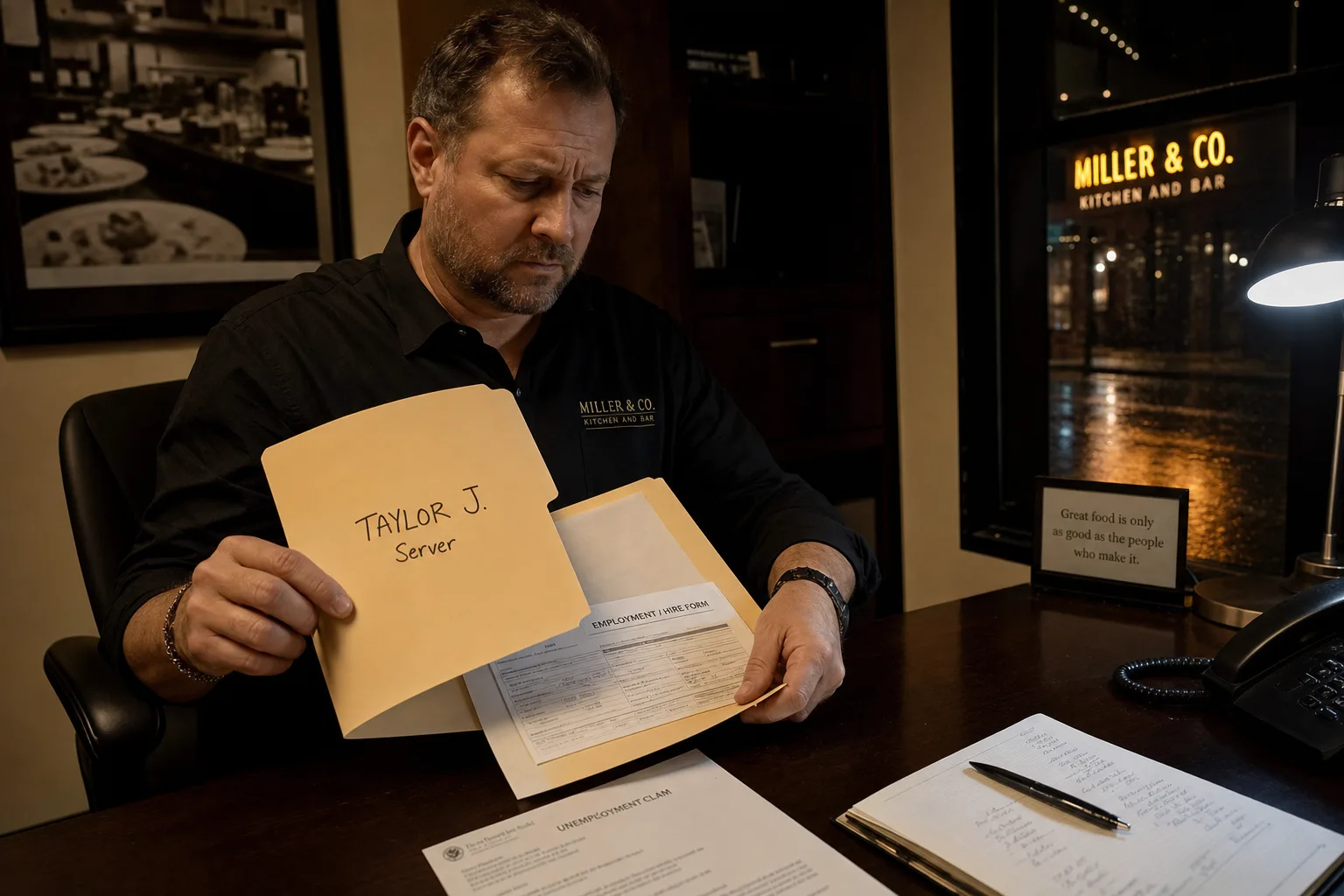
How Restaurants Lose Unemployment Claims Due to Poor Documentation
Restaurants lose UI claims when they cannot prove misconduct with dated records—not when they lack a lawyer. Build the documentation pack hearings require.
5 min read · September 2026
How Much Does an Unemployment Claim Cost an Employer?
Does an unemployment claim cost the employer? Yes. See the unemployment claim cost to employer—UI charges, SUTA rate hikes, and a free by-state calculator.
10 min read · September 2026
Restaurant Unemployment Claim Documentation
What restaurants need in the file when an unemployment claim arrives: the response pack, restaurant-specific evidence like schedule exports and POS records, and the questions hearing officers ask.
6 min read · September 2026