Incident Documentation
Employee Incident Tracking: Every Incident, One Timeline, One Standard
An incident is a fact. A pattern is a decision. Incident tracking is what turns the first into the second, without a manager's memory standing in between.
Key takeaways
- An incident report answers "what happened.
- " Incident tracking answers the harder questions: what happened before, how it was handled before, whether the same standard was applied to others, and what the next step is and when it was due.
- A claim response, a termination review, a district audit — each one is asking for the pattern, and the pattern only exists if every occurrence was recorded in the same shape and filed into the same place.
- A folder of individual reports does not show the pattern.
- Every record for one person, in order: incidents, coaching notes, write-ups, attendance occurrences, PIPs.
- The timeline is the product; the individual documents are its parts.
Why incidents need a system, not a folder
An incident report answers "what happened." Incident tracking answers the harder questions: what happened before, how it was handled before, whether the same standard was applied to others, and what the next step is and when it was due.
Those questions are the ones that decide outcomes. A claim response, a termination review, a district audit — each one is asking for the pattern, and the pattern only exists if every occurrence was recorded in the same shape and filed into the same place. A folder of individual reports does not show the pattern. A system does.
The four views
The per-employee timeline
Every record for one person, in order: incidents, coaching notes, write-ups, attendance occurrences, PIPs. This is the file a hearing officer reads, and the file an incoming GM inherits when the last one leaves. The timeline is the product; the individual documents are its parts.
The location view
What is happening on this floor, this month: incident volume by category, the employees with open follow-ups, the patterns the location should see coming. For the GM, this is the management view of the record — the difference between "we had a rough week" and "the cash discrepancies are concentrated on two shifts."
The category view
Attendance, conduct, safety, cash, service, alcohol. Where the volume is, is where the training or the policy change belongs. The category view is how a group finds the problem before it becomes a claim.
The follow-up queue
Every incident that has a next step — the coaching conversation, the write-up, the retraining, the investigation interview — and has not had it yet. This is the view that keeps incidents from going cold, and the one a district manager checks first, because a cold follow-up is a gap in the record with a date on it.
The repeat occurrence is the point
The tracking system earns its keep at the second occurrence:
- First time: a coaching conversation, recorded. The employee was told the standard, dated, attributed.
- Second time: the timeline shows the first. The written warning references it. The sequence is visible.
- Third time: the pattern is not a recollection; it is a file. The next step is a decision made from the record.
Each step is defensible because the step before it is documented. That chain — not any single document — is what the tracking system produces, and it is what a claim defense is built from.
One standard, every location
In a multi-location group, the failure mode is not bad records; it is different records. One location writes detailed incident reports; another writes one-liners. One tracks attendance occurrences; another doesn't. The district review cannot compare them, and the claim that turns on "this location did it differently" is the expensive one.
Docu-Coach™ enforces the record types and required fields across locations, so the standard is the system's, not the GM's. The roll-up views make the group's documentation one standard, and the per-employee timelines travel with the employee if they move between locations.
How it fits the rest of the stack
- Capture feeds it: the voice capture is the entry point, so the tracking starts with a contemporaneous record instead of a reconstructed one
- The HRIS holds the employee's official record; the tracking timeline exports into it when a claim or review needs the file
- Investigations draw on it and file their own documentation back into it, scoped to who needs to see it
- The owner's question — "give me everything on this employee" — is answered by the timeline, not a folder dive
Bottom line
Incident tracking is the layer that turns individual incidents into a visible, defensible history: per employee, per location, per category, with the follow-ups that keep the record current. It is the difference between a file that answers the question and a pile of documents that used to. The 30-day free trial is the fastest way to see the timeline build itself from your own shifts.
Frequently Asked Questions
What is employee incident tracking?
It is the practice of recording every employee incident in a structured, dated form and organizing it so the history is visible: per employee, per location, per category. Done well, it answers the questions that decide outcomes — was this the first time, what happened the times before, was the same standard applied to others — from the record instead of from memory.
How is incident tracking different from an incident report?
A report is one document about one event. Tracking is the system around the documents: the consistent record types, the per-employee timeline, the repeat-occurrence view, and the follow-up queue. A restaurant can have perfect incident reports and still lose the claim, because the pattern was never visible. Tracking is the layer that makes the pattern visible.
What does Docu-Coach™'s incident tracking show?
Four views: the per-employee timeline (every incident, coaching note, write-up, and occurrence for one person, dated and typed), the location view (what is happening on this floor, this month), the category view (attendance, conduct, safety, cash, service — where the volume is), and the follow-up queue (every incident that has a next step and has not had it yet). Multi-location groups see the same views rolled up, so the standard is comparable across sites.
Why do repeat occurrences matter?
Because the second occurrence is where the decision becomes defensible. A first-time issue gets a coaching conversation; a repeat gets a written warning; a pattern gets the next step. The sequence is what a hearing officer or a reviewing GM asks about, and it only exists if each occurrence was recorded and filed into the same timeline. Unrecorded first offenses make every later step look arbitrary.
How does this work across multiple locations?
The record types and required fields are the same at every location, so a district review compares like with like. Each employee's timeline is the same whether the incident happened at the downtown store or the suburb one, and the roll-up views show where the group's incident volume is concentrated. Consistency of tracking across locations is one of the strongest signals in a claim defense.
Does incident tracking replace an investigation?
No. Tracking is the record layer: it captures what happened and keeps the history visible. An investigation is a process with its own structure — interviews, statements, findings — and the tracking system holds the investigation's documentation too, with access scoped to the people who need it. The two work together: the investigation draws on the timeline, and the timeline holds what the investigation produced.
Related Resources
Employee Incident Tracking Software for Restaurants & Hospitality | Docu-Coach™
Employee Incident Tracking Software built for operators. Document incidents, coaching, write-ups, and personnel files with audit trails. Book a demo.
2 min read
Restaurant Employee Incident Tracking | Docu-Coach™
Restaurant Employee Incident Tracking for operators. Industry workflows, compliance, incident examples, and audit-ready records. Book a demo.
2 min read
Restaurant Incident Reporting Software | Docu-Coach™
Restaurant Incident Reporting Software for operators. Industry workflows, compliance, incident examples, and audit-ready records. Book a demo.
2 min read
Voice Incident Capture: Document an Employee Incident in 10 Seconds
How Docu-Coach™'s voice capture works: a 10-second note from the floor becomes a structured, timestamped incident record after close, with the original audio on file.
4 min read
How to Conduct a Workplace Investigation
How to Conduct a Workplace Investigation for operators and HR. Step-by-step guidance, legal risk, examples, and best practices.
2 min read
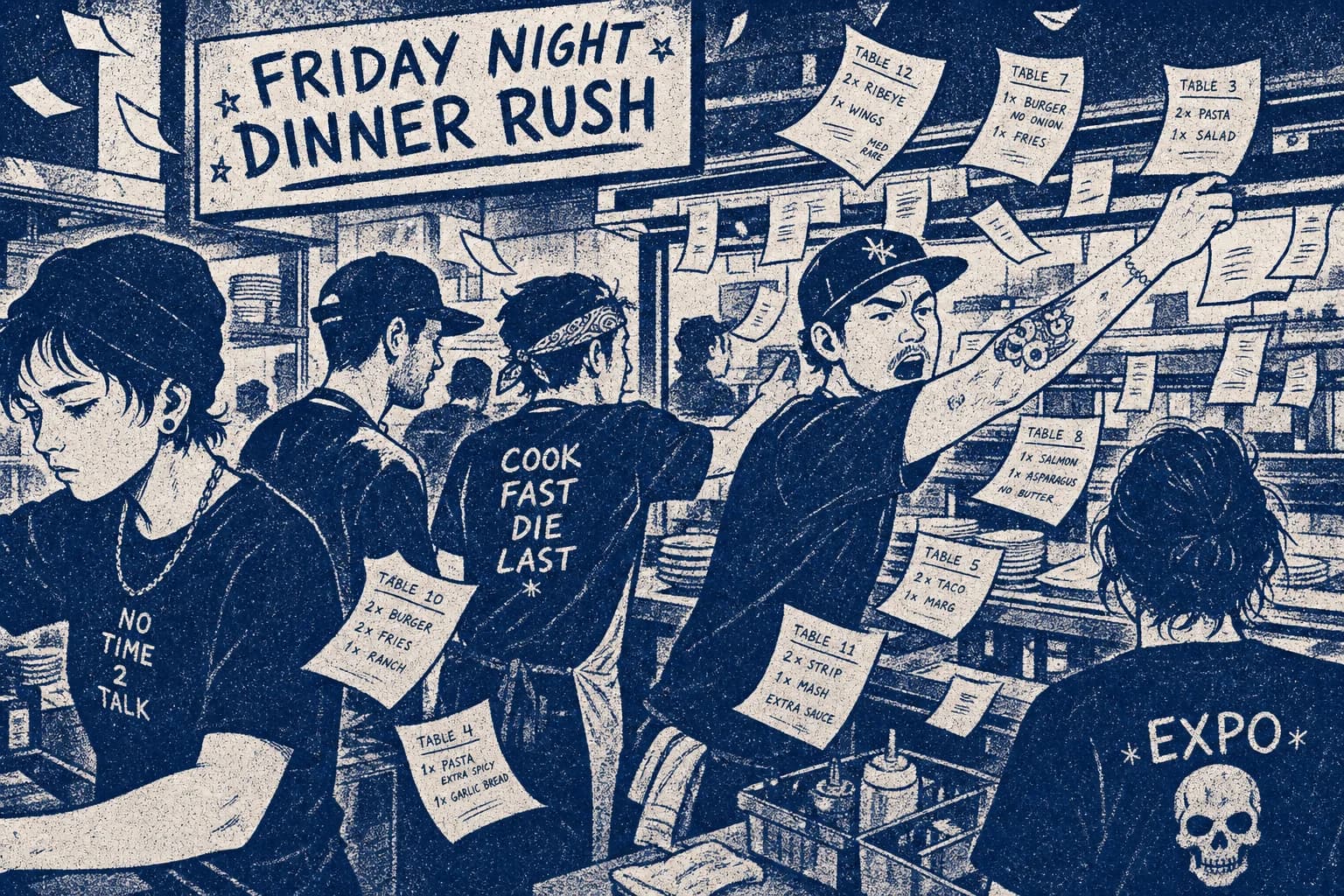
How to Document a Restaurant Employee Incident During the Rush (Without Leaving the Floor)
Friday night on the line? Learn how to document restaurant incidents in 10 seconds—before details fade and HR files stay empty.
9 min read · September 2026