Incident Documentation
How to Document a Restaurant Employee Incident During the Rush (Without Leaving the Floor)
Key takeaways
- Document rush incidents with a 10-second voice capture the same shift—date, time, observable behavior, witnesses, and action taken—before memory fades and HR files stay empty.
- You do not need a quiet office or twenty minutes at a laptop; you need a protocol you run between table touches while Expo is still calling tickets.
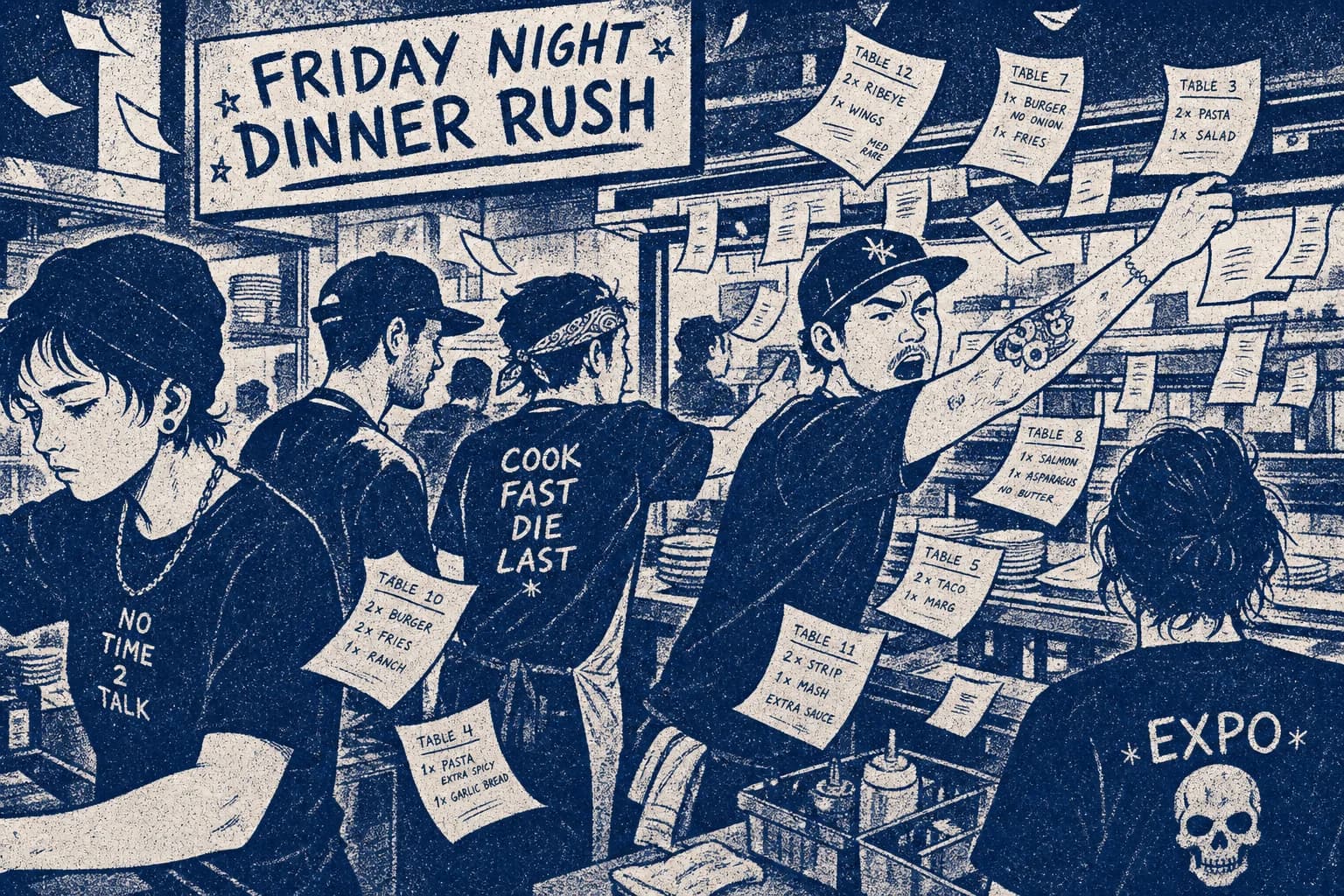
- The dining room is three-deep at the host stand, Expo is calling “all day” on table forty-one, and your best server just snapped at a runner in front of guests.
- You separated them, kept the floor moving, and told yourself you would write it up after close.
- By 11:30 you are counting the drawer, resetting the line, and the exact words—who said what, who witnessed it, what the guest reaction looked like—have already blurred.
- Not because you are a bad manager, but because the industry trains you to prioritize throughput over documentation.
How to Document a Restaurant Employee Incident During the Rush
Document rush incidents with a 10-second voice capture the same shift—date, time, observable behavior, witnesses, and action taken—before memory fades and HR files stay empty. You do not need a quiet office or twenty minutes at a laptop; you need a protocol you run between table touches while Expo is still calling tickets.
It is 7:42 p.m. on a Friday. The dining room is three-deep at the host stand, Expo is calling “all day” on table forty-one, and your best server just snapped at a runner in front of guests. You separated them, kept the floor moving, and told yourself you would write it up after close. By 11:30 you are counting the drawer, resetting the line, and the exact words—who said what, who witnessed it, what the guest reaction looked like—have already blurred.
That gap is where restaurants lose discipline cases, unemployment claims, and culture. Not because you are a bad manager, but because the industry trains you to prioritize throughput over documentation. HR does not care that you were “in the weeds.” They care whether you have a contemporaneous record (created at or near the time of the event): date, time, location, behavior observed (not personality), witnesses, and the action you took in the moment.
This article gives you the ten-second Docu-Coach™ capture protocol plus a shift-end ritual that turns each recording into a defensible employee record—built for GMs and MODs who live on the floor during rush. Use the employee incident report examples when the voice capture needs to become a complete written record.
Root Cause Analysis
Most incident documentation fails for predictable reasons, not moral ones.
Memory decay under cognitive load. During rush, your brain prioritizes threat reduction (guest experience, ticket times, safety). Narrative memory for “who insulted whom at 7:42” is deprioritized. Studies on eyewitness recall show detail loss within hours; in a restaurant, minutes matter when alcohol, stress, and repetition are involved.
No standard trigger. Managers document when something feels “big enough.” That threshold moves with volume. A sharp comment on Tuesday becomes a pattern by Saturday, but without notes you cannot connect the dots.
Tools in the wrong place. Write-ups live in the office. Your body lives on the floor. If capture requires walking to the BOH computer, it will not happen during peak.
Fear of over-documenting. Some MODs avoid notes because they do not want to “go nuclear.” The opposite risk is worse: informal warnings with no record, then termination that looks retaliatory or unsupported.
Shift handoff gaps. Night manager knows; opening manager does not. Without a shared log, the employee gets inconsistent coaching and you look disorganized in any HR review.
Fixing this is not about working harder during rush. It is about designing a capture method that respects rush—and still produces admissible, useful records.
The Actionable Framework
The 10-Second Voice Capture Protocol
Use this immediately after you stabilize the situation (separate parties, check the guest, brief the chef if needed). Do not wait for “a better time.”
- Step aside—BOH pass, office threshold, or expo corner; ten feet from the guest earshot is enough.
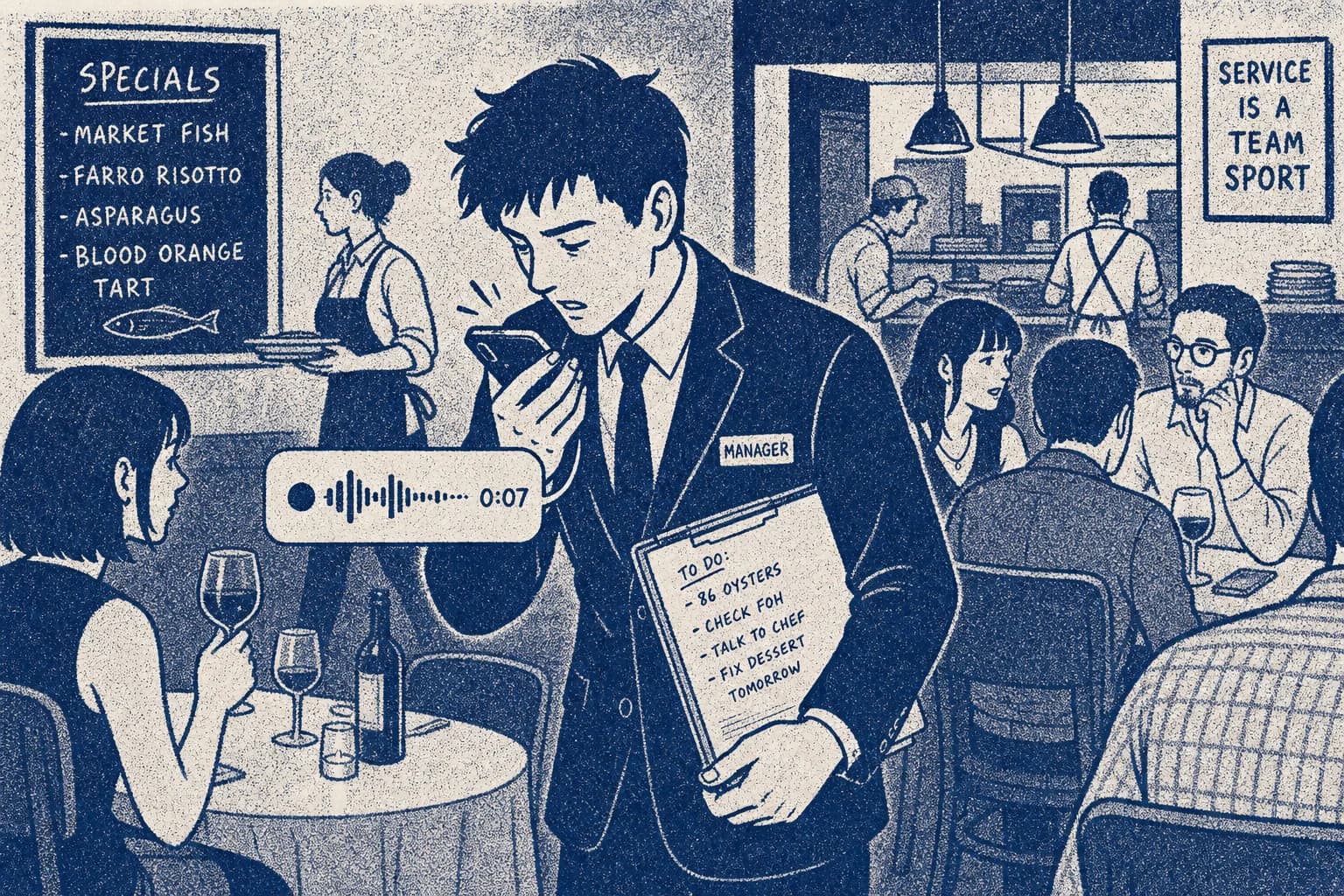
- Open Docu-Coach™ on your phone and start a voice capture. One capture per incident; do not bundle.
- Read the script below in a calm, flat tone. Fill brackets aloud.
- Stop the capture—Docu-Coach™ auto-stamps, names, and links the recording to the employee record the moment you finish.
You are not writing the final write-up. You are freezing facts while they are fresh.
Incident Voice Script (use verbatim structure)
Incident capture—[DATE] [TIME] [LOCATION: FOH/BOH/bar/patio].

Employee observed: [FULL NAME], role [SERVER/RUNNER/COOK/etc.].

Behavior observed (facts only, quotes if exact): "[QUOTE OR DESCRIPTION]."
Not observed / do not know: [e.g., intent, prior conversation I did not hear].

Witnesses: [NAMES/ROLES] or "none named yet."

Guests impacted: [YES/NO—if yes, table/guest reaction without names if unknown].

Immediate action taken: [separated / coached on floor / sent on break / clocked out / other].

Follow-up required: [conversation with employee / write-up / HR / none tonight].

Recording manager: [YOUR NAME], MOD/GM on duty.
Shift Checklist (end of shift, 8–12 minutes)
Run this before you leave the building. Pair it with cash pull or safe count so it becomes habit.
| Step | Done? | Owner |
|---|---|---|
| Voice captures filed to employee record in Docu-Coach™ | ☐ | MOD |
| Any incident → verify Docu-Coach™ generated summary is in employee record | ☐ | MOD |
| Witness statements requested if termination-level or guest complaint | ☐ | MOD |
| Handoff note in Docu-Coach™ for next manager (name, behavior, action, follow-up date) | ☐ | MOD |
| Follow-up conversation confirmed for within 24–48 hours (Docu-Coach™ sends the reminder automatically) | ☐ | MOD |
| HR notified if policy triggers (violence, harassment, alcohol, theft) | ☐ | GM |
Same-Day Written Summary
A structured summary covers five points: When / Where / Who / What was observed / What you did. Avoid labels (“attitude,” “lazy”). Use verbs: “raised voice,” “refused sidework,” “left station without coverage.” Docu-Coach™ generates this structure from your voice capture automatically—the formal record is ready to review before you leave the building, not a draft waiting on a follow-up shift. When the capture becomes the formal record, the restaurant incident report structure adds the two pieces a voice note usually skips: the notification log with clock times, and the camera clip exported before the DVR rolls over.
Coaching Conversation (within 24–48 hours, off rush)
- Private, scheduled, not on the line.
- Present facts from your capture; ask their account once.
- State expectation and consequence tier per your handbook.
- Note their response—Docu-Coach™ adds it to the existing incident record so the entry stays in one place.
When Two Incidents Stack in One Rush
Double-booked rushes happen: a cook walks off station and a server argues with a guest in the same hour. Rule: one Docu-Coach™ capture per incident—never one long recording covering three people. Start separate captures for each event (e.g., 1942-cook-station and 2010-server-guest). If adrenaline is high, take sixty seconds in the walk-in after the second event and run the script again; do not merge stories in your head. Merged stories become merged write-ups, and HR cannot separate consequences fairly.
Train your shift leads on the ten-second script during a slow lunch once a quarter. When the GM is expo and the MOD is hosting, the lead who witnesses behavior should capture witness facts only (“I heard X say Y at the pass”) in Docu-Coach™ and flag the MOD in the Docu-Coach™ handoff log. That distributes load without turning every server into HR.
Frequently Asked Questions
How do you document an incident during a restaurant rush?
Stabilize the situation, step aside for 10 seconds, voice-capture FACT details (date, time, behavior, witnesses, action taken) via Docu-Coach™, then run the shift-end checklist to file the record before leaving.
How quickly must rush incidents be documented?
Same shift, ideally within 2 hours of the event. Memory fades within minutes during high-volume service; contemporaneous voice capture holds up in HR and unemployment proceedings.
Can a voice note replace a formal write-up?
Voice capture is strong contemporaneous evidence but may still require a formal corrective action per handbook. Docu-Coach™ links capture to structured summaries automatically.
What should every rush incident capture include?
Date, time, location, employee name, observable behavior (not labels), witnesses, guest impact, immediate action, and follow-up required—using the verbatim script structure in this article.
What if two incidents happen in one rush?
One capture per incident—never bundle. Separate recordings with distinct timestamps so HR can apply fair, individual consequences.
Should shift leads document incidents when the GM is expo?
Yes—witness facts only, flagged to MOD in the handoff log. Train leads on the 10-second script during slow periods once per quarter.
When must HR be notified during rush?
Same night for violence, harassment, guest injury, alcohol violations, or theft allegations—log in Docu-Coach™ and escalate per policy.
How do I get started with Docu-Coach™ for floor capture?
Book a demo at docu-coach.com/demo or email hello@docu-coach.com for a 30-day trial walkthrough.
The Paper Trail and Legal Safeguard
A Docu-Coach™ voice capture is strong contemporaneous evidence if it is prompt, factual, and stored in the employee record. It is not a substitute for a formal write-up when policy requires one—but it protects you when you could not type during service.
Pro tip: Unemployment and EEOC reviewers treat delayed documentation as reconstructed memory. Capture within 2 hours of the shift event—even a 10-second voice note beats a paragraph typed at midnight.
What makes documentation hold up
- Contemporaneous: Created the same shift, ideally within an hour.
- Observable: What a camera or witness could corroborate—not mind-reading.
- Consistent: Same format every time; easier for HR and counsel to review.
- Progressive: Small incidents logged early support later discipline.
- Handbook-aligned: Tie behavior to a policy section when you formalize.
Common legal pitfalls during rush
| Pitfall | Safer practice |
|---|---|
| Documenting only after termination decision | Log incidents in Docu-Coach™ as they occur |
| Opinions (“toxic,” “bad attitude”) | Behavior (“interrupted pre-shift, refused checklist”) |
| Public discipline at the line | Brief correction; full conversation private |
| No witness note when guests or staff saw | Collect names same night |
| Destroying drafts or using personal texts only | Docu-Coach™ employee record with retention policy |
If a guest complains or anyone mentions injury, bias, or harassment, escalate per policy the same night—log the incident in Docu-Coach™ and notify HR from the employee record so the capture and escalation share one timestamp.
Retention tip: Auditors and unemployment judges look for a single, unbroken timeline—voice capture, summary, and formal record must share one timestamp chain. Any gap or discrepancy between what you captured at 7:42 p.m. and what the file shows raises credibility questions. Docu-Coach™ links every voice capture to a timestamped employee record the moment it is created, so there is no separate formalization step and no overnight gap to explain.
Natural Solution Contextualization
Floor-ready documentation is a habit problem disguised as a time problem. The ten-second Docu-Coach™ capture protocol removes the excuse of “I was on the floor,” and the shift checklist ensures every recording becomes a filed employee record before you leave the building.
Docu-Coach™ is built for this exact workflow: hands-free capture during service, structured fields that mirror the script above, automatic timestamps, and instant filing to the employee record—so there is no "formalize after close" step to forget. HR gets consistent incident logs without hunting through group texts or napkin notes, and every capture already shares one timeline with the formal record.
You will still run coaching conversations in person—that is leadership. But during rush, the win is capturing truth in ten seconds so the record is airtight before the next shift starts. Do that consistently, and discipline stops feeling like a surprise attack and starts feeling like fair, documented accountability.
Explore this topic
Related Resources
Restaurant Incident Report
How to write a restaurant incident report the same shift: injuries, guest conflicts, alcohol service, cash, theft, and food safety — plus what evidence to preserve before footage overwrites.
7 min read · September 2026
Allergen Error: How to Document It
What to record after an allergen error: the ticket and modifier trail, the plate's path through the kitchen, the guest's own words, and the product to keep.
7 min read · September 2026
Documenting an Employee Injury on Shift
What to record when a cook burns a hand or a server slips on shift: the mechanism, the care offered, the equipment, and where medical details must not go.
7 min read · September 2026
Guest Injury Incident Report for Restaurants
What to record when a guest is injured in your restaurant: the scene, the witnesses, the evidence to preserve tonight, and the notifications you have to log.
7 min read · September 2026
Documenting an Overservice Incident
What to record when alcohol service becomes a question: the observations, the pour count and timing, the refusal, the transport offered, and who was told.
7 min read · September 2026
Witness Statement Form for Restaurant Incidents
A blank witness statement form for restaurant incidents, the fields it needs, how to collect accounts separately, and what makes one usable weeks later.
8 min read · September 2026