HR & Labor Compliance
Chronic Attendance in Restaurants: Pattern Coach Plan Protocol and PIP That Holds Up
Key takeaways
- Chronic attendance in restaurants requires the Pattern Coach Plan (PCP): document every late arrival or no-call/no-show same shift, coach on dated facts within 48 hours, and escalate through written warning and PIP before termination—not informal texts that never hit the file.
- One-off emergencies happen; undocumented patterns destroy team trust and lose unemployment hearings.
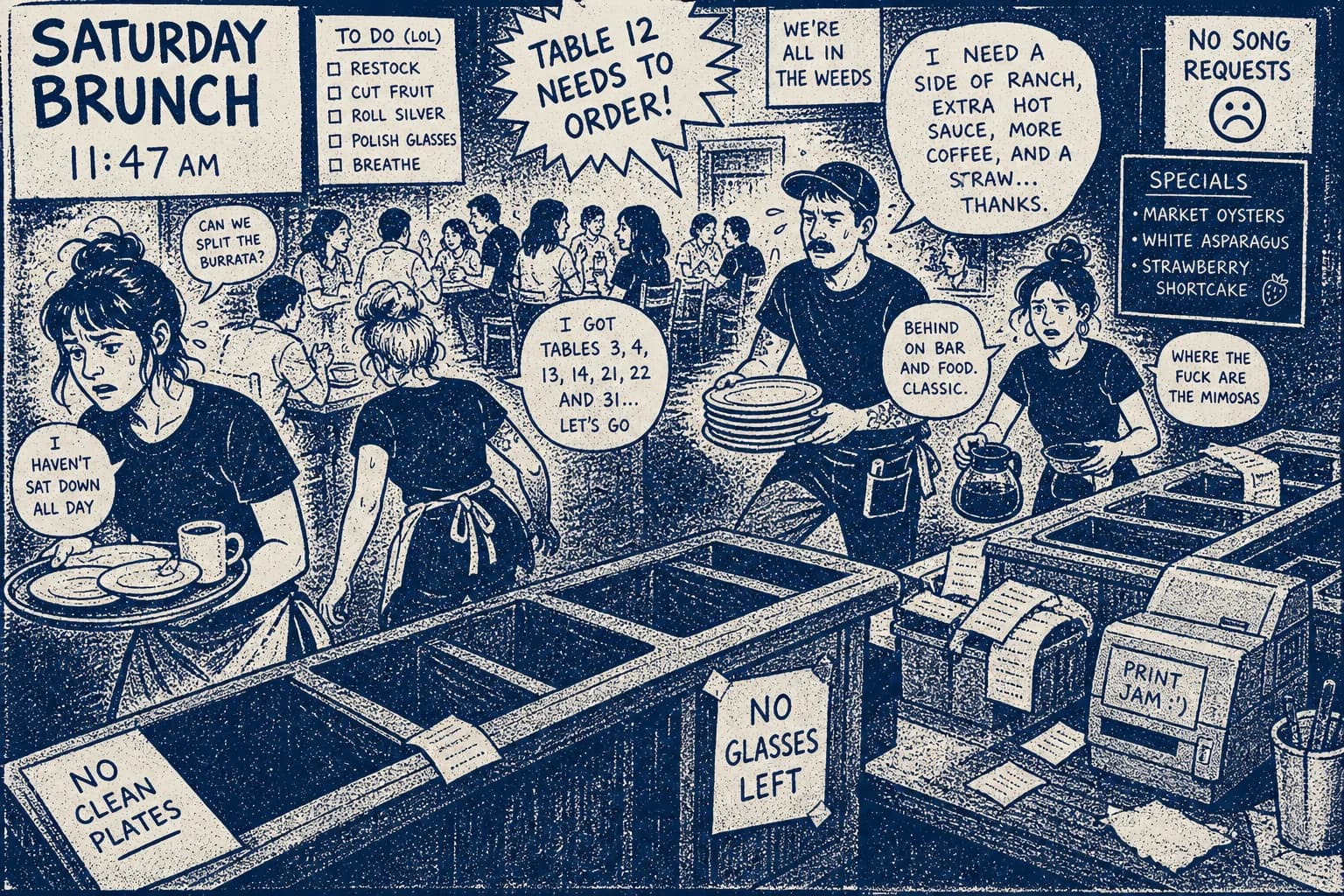
- Saturday brunch: two servers no-show, the line cook called “sick” forty minutes after start, and the host—you needed on the door—is twenty minutes late again.
- The team that did show up runs double sections, snaps at each other by 1 p.
- , and quietly updates their Indeed profiles.
- You are angry at the absentees and guilty toward the reliable crew.
Chronic Attendance in Restaurants: Pattern Coach Plan Protocol
Chronic attendance in restaurants requires the Pattern Coach Plan (PCP): document every late arrival or no-call/no-show same shift, coach on dated facts within 48 hours, and escalate through written warning and PIP before termination—not informal texts that never hit the file. One-off emergencies happen; undocumented patterns destroy team trust and lose unemployment hearings.
Saturday brunch: two servers no-show, the line cook called “sick” forty minutes after start, and the host—you needed on the door—is twenty minutes late again. The team that did show up runs double sections, snaps at each other by 1 p.m., and quietly updates their Indeed profiles. You are angry at the absentees and guilty toward the reliable crew. Again.
When GMs “handle it” with informal texts and never log dates, termination looks sudden and unemployment wins. When they fire in frustration without a plan, the team thinks you are arbitrary.
This article delivers the PCP steps, an attendance coaching script, a PIP outline that holds up, and morale rules so the floor stays united while you enforce standards. Use it alongside the broader restaurant attendance documentation guide to align attendance records, coaching, and discipline. File each ghosted shift with the restaurant no-call/no-show write-up. File each late clock-in with the restaurant tardiness write-up before you treat the week as one "attendance problem."
Root Cause Analysis
Ambiguous “on time.” Grace periods differ by MOD; some clock in at :07 and nobody says anything until they are fired at :20.
Inconsistent consequences. Night MOD writes up; day MOD sympathizes. Patterns never connect across shifts.
No pattern definition. HR and GMs argue whether three lates in a month is “chronic” or six. Without a written threshold, nothing triggers escalation.
Sympathy without structure. Good leaders want to help childcare, transport, health—and should, through HR accommodations—not by ignoring undocumented absences.
Team morale ignored. Public complaints about absentees (“where is Jake again?”) poison the crew; silence from management reads as favoritism.
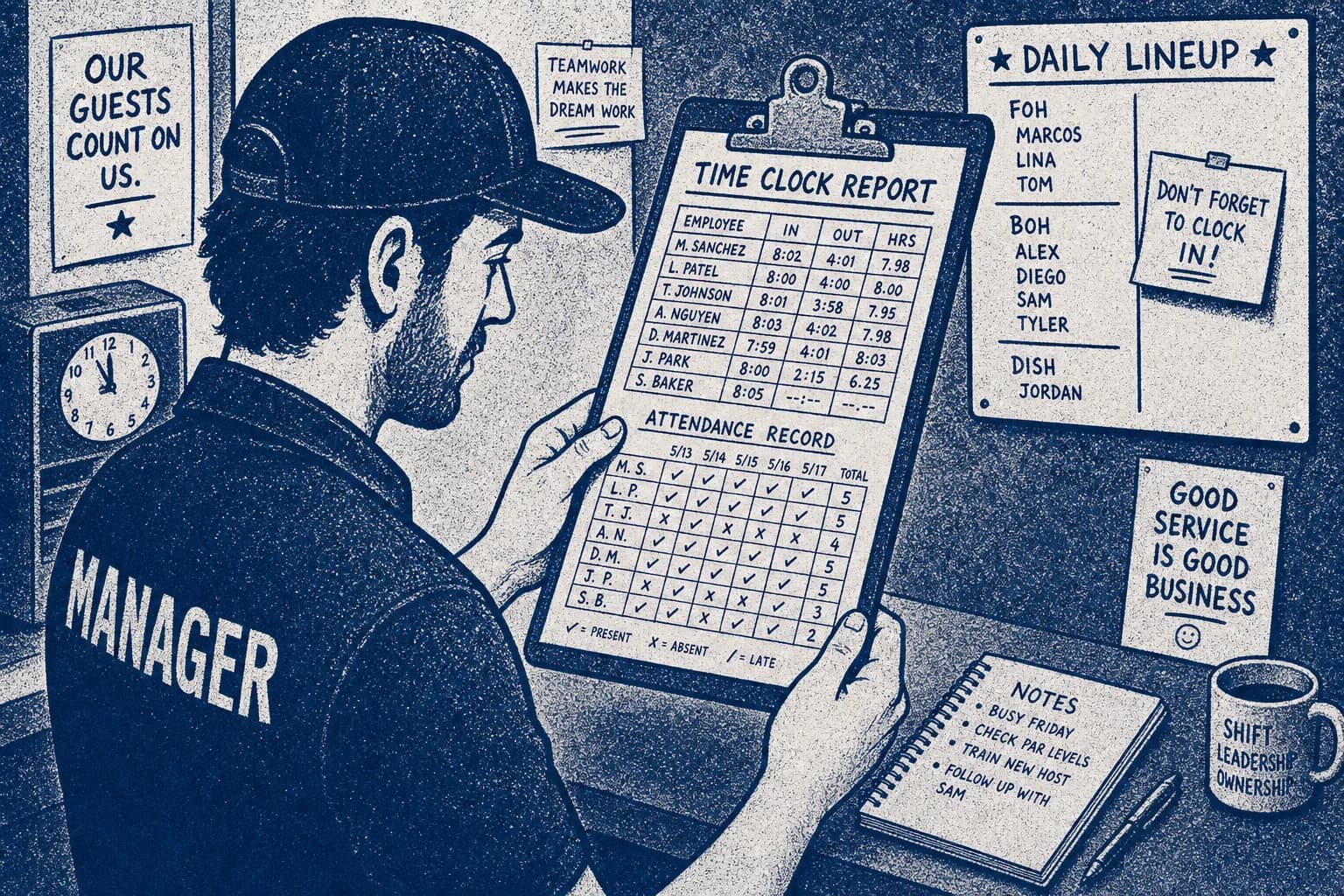
POS data unused. Timeclock exports sit unread until separation. Facts are available; habit is not.
PCP turns attendance into measurable, logged, escalated behavior—same as food safety, not a personal grudge.
The Actionable Framework
Define “Pattern” (publish to managers and staff)
Set store or company thresholds in writing, for example:
| Level | Trigger (example—align to handbook) |
|---|---|
| Document | Any no-call/no-show, late > X minutes, early out without approval |
| Coach (PCP Step 1) | 2nd occurrence same category in 60 days |
| Written warning (Step 2) | 3rd occurrence in 60 days OR 1 no-call/no-show |
| PIP (Step 3) | 4th occurrence in 90 days OR 2nd no-call/no-show in 12 months |
| Separation review | PIP failed or zero-tolerance per policy |
Adjust numbers to your handbook; consistency matters more than the exact count.
Compliance warning: Never terminate for attendance pattern without dated entries for each occurrence. UI boards award benefits when the file shows sudden action without progressive coaching.
Pattern Coach Plan (PCP) Protocol
Step 0 — Same shift (every occurrence)
Log in Docu-Coach™: date, scheduled in/out, actual punch or absence, call time if any, MOD name, and coverage impact in one line. Docu-Coach™ records these fields with an automatic timestamp so every MOD's entry looks identical in HR's file. Each occurrence type gets its own record—the restaurant attendance write-up page defines all six and shows how to write coverage impact as numbers instead of frustration.
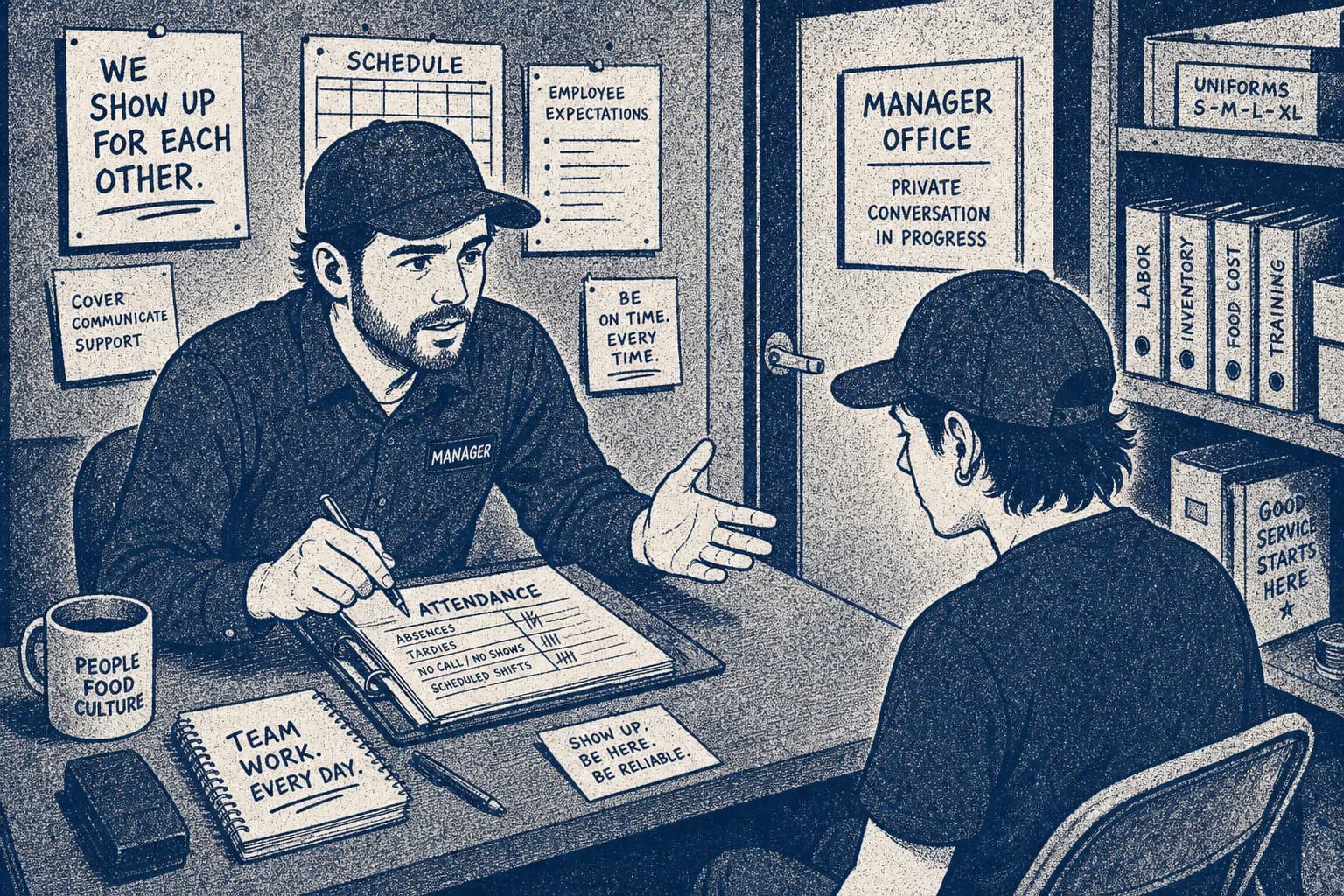
Step 1 — Coaching conversation (within 48 hours, private)
Use script below. Log verbal coaching note in Docu-Coach™.
Step 2 — Written warning
Enter FACT dates in Docu-Coach™; cite handbook attendance section; note consequence if pattern continues.
Step 3 — Attendance PIP (30 days typical)
Create PIP in Docu-Coach™ with measurable standard: e.g., zero unexcused absences, not late more than once (define late). Log weekly check-ins in Docu-Coach™.
Step 4 — Separation or extension
HR review; confirm Docu-Coach™ file is complete before final shift if terminated.
Attendance Coaching Script
ATTENDANCE COACHING — PCP STEP 1 (or post-occurrence every time)

OPEN
“Thanks for meeting. This is about attendance and reliability—not everything you do at work.”

FACTS (read dates; do not argue memory)
“On [date] you were scheduled [in–out]. [What happened: late by X min / no-call no-show / left early].”
“On [prior date] the same category occurred: [brief FACT].”
“This is occurrence #[2/3] in [60] days per our attendance standard.”

POLICY
“Our handbook section [___] requires [call-out window, punctuality, etc.].”

IMPACT (brief, not guilt trip)
“When this happens, the team covers your station and guest service suffers.”

THEIR ACCOUNT (once)
“What prevented you from meeting the schedule?”
[Note answer. If medical/FMLA/accommodation, stop—refer to HR. Do not diagnose.]

EXPECTATION
“Going forward: [specific—call MOD at least X hours before shift if unable to work; arrive ready to clock in by ___].”

CONSEQUENCE PATH
“This is documented coaching. Next step per policy is [written warning / PIP]. I need reliable attendance from here.”

CLOSE
“Do you understand the standard and what happens if the pattern continues?”
Schedule follow-up: [date]. Log entry in Docu-Coach™ same day.
PIP Outline (Attendance — Step 3)
PERFORMANCE IMPROVEMENT PLAN — ATTENDANCE
Employee: _________________________  Store: _________  Start date: _________
Manager: _________________________  HR contact: _________________________
Plan length: 30 calendar days (unless handbook differs)

PROBLEM STATEMENT (FACT)
Employee has demonstrated a pattern of attendance failures:
• [Date]: [scheduled vs actual]
• [Date]: [scheduled vs actual]
• [Date]: [scheduled vs actual]
Prior coaching/warnings on file: [dates and types].

STANDARD DURING PIP
For the next 30 days, employee must:
1. Report to all scheduled shifts on time (defined: ready to work, clocked in by ___).
2. Provide approved notice for any absence per handbook (minimum ___ hours via ___).
3. Incur zero unexcused no-call/no-show events.

SUPPORT (optional, factual)
[ ] Schedule review completed [date]
[ ] EAP / HR referral offered if appropriate
[ ] Training N/A unless related

CHECK-INS
Weekly meeting: [day/time] with [manager]. Document each: on track / off track.

OUTCOMES
• Success: Pattern ends; PIP closed in file with dates; return to normal coaching rhythm.
• Failure: Further discipline up to and including termination per handbook.
• Extension: Only with HR written approval and new measurable end date.

Employee signature: _________________ Date: _______
Manager signature: _________________ Date: _______
HR acknowledgment: _________________ Date: _______

WEEKLY CHECK-IN LOG (record each in Docu-Coach™)
Week 1: [ ] Met standard  [ ] Did not — notes: _______________________
Week 2: [ ] Met standard  [ ] Did not — notes: _______________________
Week 3: [ ] Met standard  [ ] Did not — notes: _______________________
Week 4: [ ] Met standard  [ ] Did not — notes: _______________________
Morale Rules (protect the team that shows up)
-
No public shaming. Do not announce “Jake’s late again” in pre-shift. Address individuals privately; address the team on standards (“on-time expectation is…”).
-
Recognize reliability. Monthly shout-out or small perk for perfect attendance quarter—cheap, loud, fair.
-
Fair coverage. Do not reward chronic absentees with “easy” sections when they appear; team notices.
-
Same rules for favorites. Pattern protocol applies to tenured and new hires alike; document if you grant a one-time exception with HR note.
-
Communicate without details. To the crew: “I’m handling schedule adherence with individuals; I appreciate those of you who show up ready.” No HIPAA, no drama.
-
Speed. Slow discipline trains the team that punctuality is optional. PCP timelines exist to act before resentment hardens.
Frequently Asked Questions
What is chronic attendance in restaurants?
A pattern of lateness, no-call/no-shows, or early outs that exceeds your published handbook threshold—typically documented across multiple occurrences in 60–90 days, not a single emergency.
What is the Pattern Coach Plan (PCP)?
A protocol to log every attendance occurrence same shift, coach on facts within 48 hours, escalate through written warning and PIP, and protect team morale with private—not public—discipline.
How should no-call/no-shows be documented?
Same shift: scheduled time, actual absence, call time if any, coverage impact, MOD name, and POS schedule proof. Each NCNS triggers coaching per your published pattern definition.
When should an attendance PIP be used?
When handbook thresholds are met—often after multiple documented occurrences or a second NCNS in 12 months. PIP must include measurable 30-day standards and weekly check-ins.
Can I fire an employee immediately for a no-show?
Depends on handbook and state law. Many policies require progressive steps unless zero-tolerance. Always review the file with HR before separation.
How do attendance issues affect unemployment claims?
Employers win when they show dated pattern, handbook acknowledgment, coaching, and progressive discipline—not a single termination memo without history.
How does Docu-Coach™ support attendance documentation?
Auto-timestamped attendance entries, pattern visibility for HR, and reminders when written warning or PIP steps are due.
How do I get started with Docu-Coach™ for attendance tracking?
Book a demo at docu-coach.com/demo or email hello@docu-coach.com for a 30-day trial walkthrough.
The Paper Trail and Legal Safeguard
Attendance claims dominate restaurant unemployment cases. Winners have dates, policies, and progressive steps.
Do
- Log every occurrence in Docu-Coach™ the same shift.
- Docu-Coach™ attendance entries include punch data and timestamps for hearing exhibits.
- Offer PIP with clear metrics when handbook supports it.
- Involve HR for medical, pregnancy, FMLA, religious accommodation, or disability topics.
Do not
- Deduct pay or make up policies not in writing without counsel.
- Terminate in anger the day of a no-show without file review.
- Discuss one employee’s attendance with coworkers.
- Ignore pattern because “we’re short”—you will stay short and broke on overtime.
| Hearing question | Your file should show |
|---|---|
| Did they know the rule? | Handbook ack + coaching citing section |
| Was it enforced consistently? | Same thresholds across MODs |
| Were they given chance to fix? | PCP steps, PIP, dated check-ins |
Chronic attendance is fixable only when the employee chooses to fix it—or when you free the team with a documented separation. Both outcomes require a paper trail.
Natural Solution Contextualization
Attendance problems feel emotional because the team suffers in real time. The Pattern Coach Plan removes improvisation: every MOD logs the same way, coaches on the same script, and escalates on the same calendar.
Docu-Coach™ auto-timestamps attendance entries, links occurrences into a visible pattern for HR, and reminds you when Step 2 or PIP is due—before the reliable server quits and before unemployment hears “they never said anything.” You stay on the floor; the protocol runs in the background.
Publish your pattern definition in the next manager meeting. Run PCP on the next repeat offender with the same respect you give a great hire—and the same documentation you would want if you were reviewing the file from corporate. Your show-up crew will notice. So will HR.
Explore this topic
Related Resources
Restaurant Attendance Write-Up
How restaurant managers document attendance: occurrence types, schedule proof, coverage impact, and the progressive steps that turn a bad Saturday into a provable pattern.
7 min read · September 2026
Restaurant Employee HR Documentation System: From Scattered Notes to Audit-Ready Files
Empty employee files and sticky-note write-ups cost you at unemployment hearings. Build a unified restaurant HR documentation system that scales across locations.
8 min read · September 2026
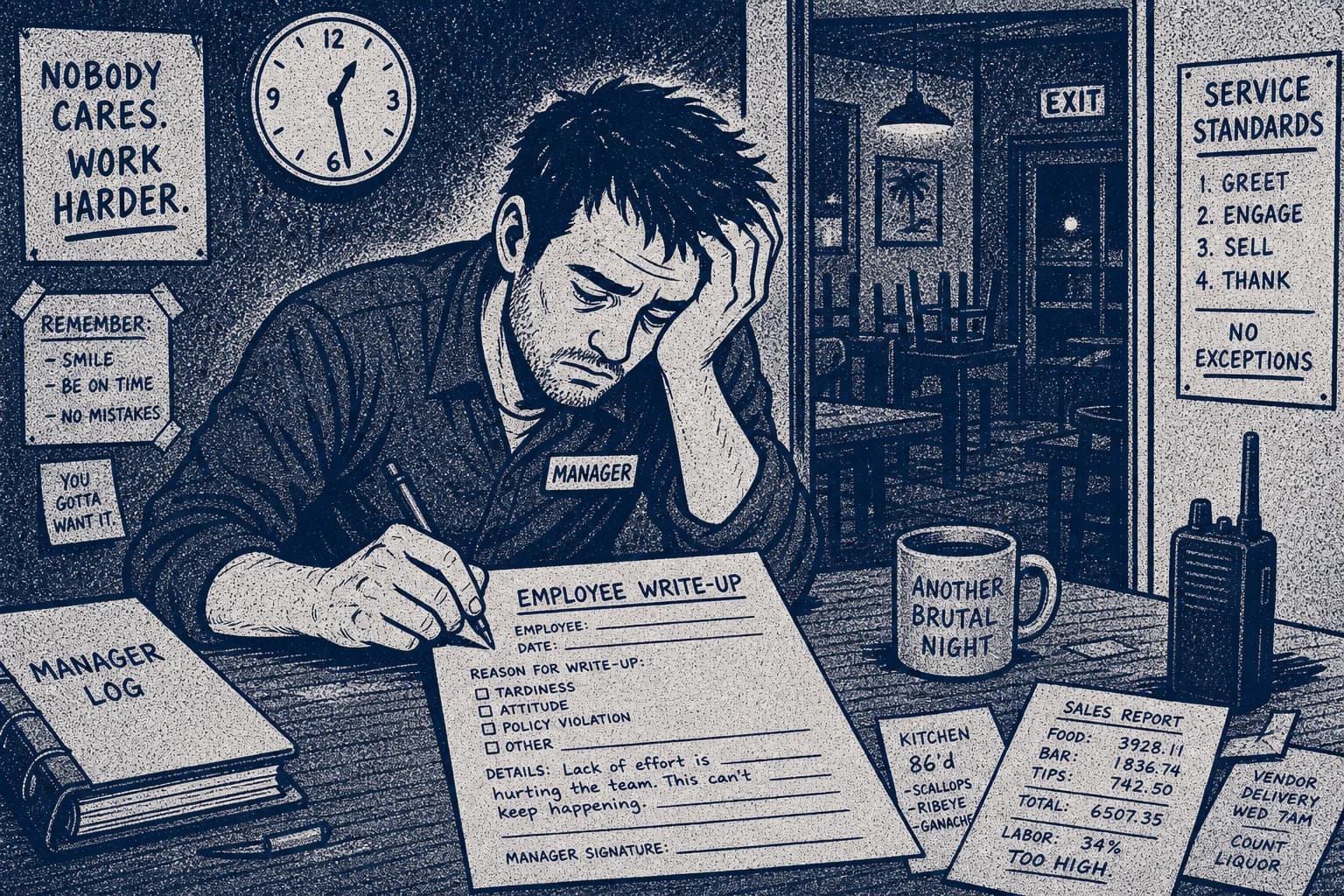
How to Write Up a Restaurant Employee Legally: FACT Method and Defensible Templates
Stop writing 'bad attitude' write-ups that fail in HR. Use the FACT method, strip emotion from discipline, and generate defensible corrective actions in Docu-Coach™.
8 min read · September 2026
Restaurant Manager 1-on-1 Coaching Script: CLEAR Structure for Performance Conversations
Skip awkward parking-lot pep talks. Use the CLEAR 1:1 framework, a full coaching script template, and pushback roleplay for restaurant managers.
8 min read · September 2026
Best Employee Documentation Software in 2026: 6 Options Compared
The best employee documentation software compared: what each tool captures, how it timestamps records, and which one actually holds up when a claim arrives.
5 min read
Docu-Coach™ and MCP: Employee Documentation Software with an MCP Connection
What an MCP connection means for employee documentation: structured, machine-readable records that AI assistants can query, draft from, and act on — and where Docu-Coach™ stands.
5 min read