Compliance & Legal
Paper Personnel Files vs Digital Documentation
Key takeaways
- Paper personnel files fail operators on speed, search, and contemporaneous capture; purpose-built employee documentation software wins on timestamps, multi-unit roll-up, and floor-ready recording—while generic cloud folders alone are not enough.
- The filing cabinet in the manager office holds hire packets and maybe a food handler card, but it cannot document a BOH argument at 8:15 p.
- when you are running doubles on the line.
- You are not clinging to paper out of nostalgia.
- Paper survived because it required no login, no training, and no IT ticket.
- On a short-staffed Tuesday when the Wi-Fi flickers and three people call out, "file it later" feels rational—until unemployment asks for proof that Jose received coaching on attendance before you terminated him, and the folder has a sticky note that says "talked to him.
Paper Personnel Files vs Digital Documentation
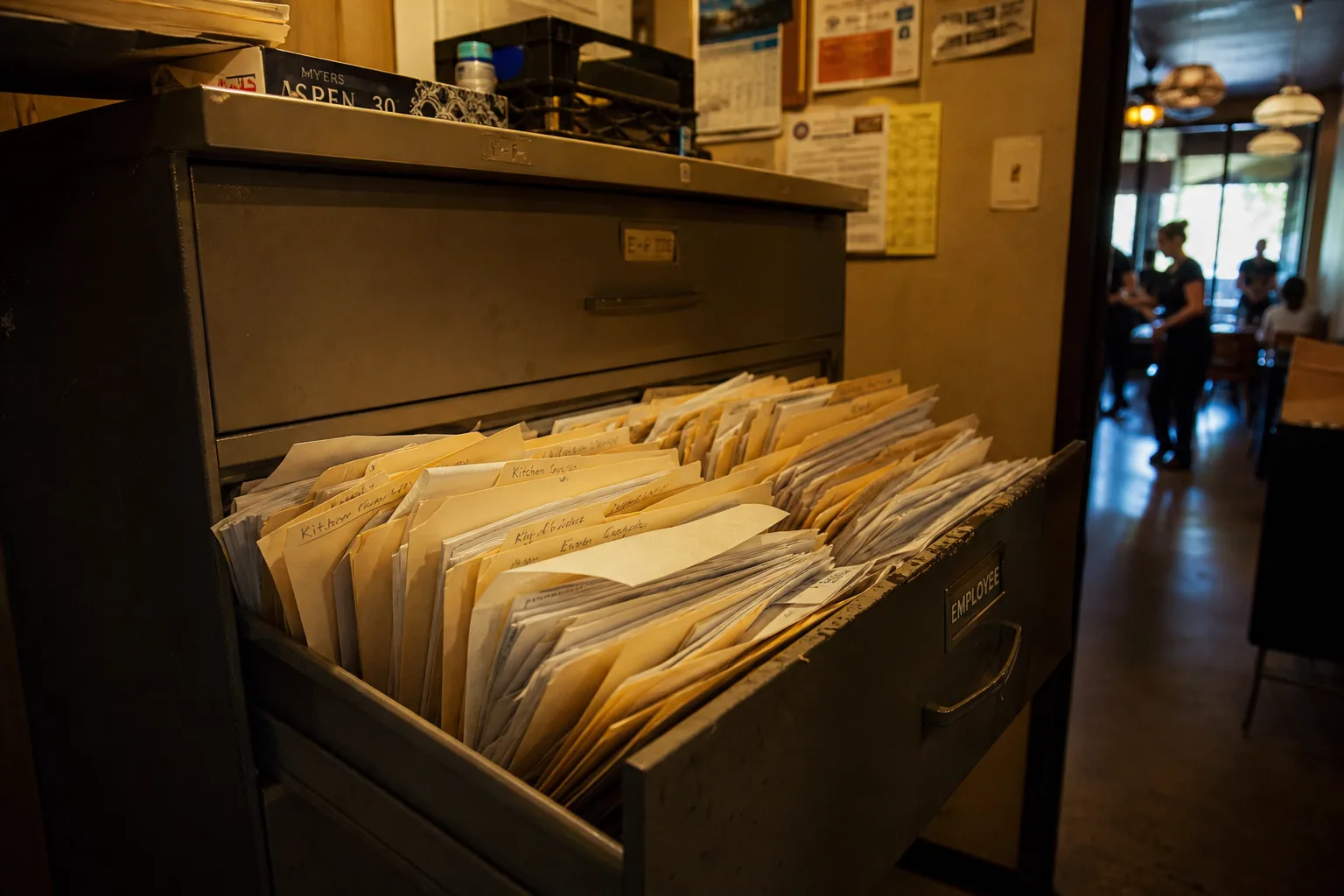
Paper personnel files fail operators on speed, search, and contemporaneous capture; purpose-built employee documentation software wins on timestamps, multi-unit roll-up, and floor-ready recording—while generic cloud folders alone are not enough. The filing cabinet in the manager office holds hire packets and maybe a food handler card, but it cannot document a BOH argument at 8:15 p.m. when you are running doubles on the line.
You are not clinging to paper out of nostalgia. Paper survived because it required no login, no training, and no IT ticket. On a short-staffed Tuesday when the Wi-Fi flickers and three people call out, "file it later" feels rational—until unemployment asks for proof that Jose received coaching on attendance before you terminated him, and the folder has a sticky note that says "talked to him."
Root Cause Analysis
Capture delay. Paper lives in the office; managers live on the floor. Write-ups drafted "after close" compete with cash pull, breakdown, and exhaustion—and often never get printed.
Physical fragility. BOH humidity, spilled coffee, and "I thought I filed that" gaps destroy pages. Retention schedules mean nothing if the record never existed.
No search at scale. Multi-unit groups with twelve drawers cannot answer "show me all attendance coaching in Region 2 last quarter" without flights and phone calls.
Inconsistent formats. One GM uses corporate forms; another uses notebook paper. Progressive discipline timelines become impossible to reconstruct.
Security theater. A locked drawer is not access control when five people share the key and terminated employee files sit in the same stack.
Scanning is not workflow. PDF archives of old write-ups do not create same-shift discipline habits during rush.

The Actionable Framework
Paper vs. Purpose-Built Digital (Not Generic Cloud)
| Factor | Paper file | Generic digital folder | Purpose-built documentation |
|---|---|---|---|
| Rush capture | Poor (office trip) | Poor (navigation) | Voice note on floor, ~10 sec |
| Timestamp integrity | Manual date on form | File edit time | Event-time stamp |
| Multi-unit search | None | Folder archaeology | Employee timeline + filters |
| Required fields | Optional | Blank docs | Structured record types |
| Progressive discipline view | Manual sort | Scattered files | Chronological chain |
| Access control | Shared key | Link sprawl | Role-based |
Hybrid Transition Plan (90 days)
Days 1–30: Keep paper for static hire docs if required; define five live record types (incident, coaching, attendance, investigation, separation summary).
Days 31–60: Pilot digital same-shift capture at one store; MODs voice-note within 2 hours of events.
Days 61–90: Area review of file quality; retire paper for new discipline entries; scan legacy warnings into archive read-only.
Compliance note: State UI boards and the EEOC care less about paper vs. digital format than whether records are contemporaneous, specific, and consistent. A pristine empty folder—paper or cloud— loses hearings equally.
File Quality Audit (per employee)
| Item | Paper drawer | Digital timeline |
|---|---|---|
| Handbook acknowledgment | ☐ | ☐ |
| Dated coaching before write-up | ☐ | ☐ |
| FACT-based incident language | ☐ | ☐ |
| Employee response captured | ☐ | ☐ |
| Attendance pattern documented | ☐ | ☐ |
The Paper Trail and Legal Safeguard
Whether paper or digital, defensible files share the same spine: progressive discipline, FACT observations, and employee acknowledgment or documented refusal.
Do
- Document same shift for incidents and coaching.
- Cite handbook sections by number in write-ups.
- Store harassment and medical notes in HR-restricted digital files even if hire paperwork stays paper.
- Scan legacy paper into read-only archive; stop creating new paper discipline records.
Do not
- Rely on "verbal warnings" with no dated entry anywhere.
- Keep terminated employee docs in active drawers indefinitely without inventory.
- Let managers take personnel files home "to finish write-ups."
- Assume digital = compliant if it is only unstructured email attachments.
Frequently Asked Questions
Are paper personnel files still legal for restaurants?
Yes, paper files remain legal in most states, but they fail operationally: slow floor capture, lost pages, no multi-unit search, and weak proof of contemporaneous documentation during unemployment hearings.
What are the main risks of paper employee files?
Missing signatures, incomplete progressive discipline, water/damage in BOH-adjacent offices, and managers who 'meant to file' write-ups that never left the drawer.
Is scanning paper files enough to go digital?
Scanning hire paperwork helps retention, but it does not fix live capture during rush. You still need same-shift incident and coaching documentation with timestamps.
What should a digital personnel file include?
Hire docs, handbook acknowledgment, dated incident/coaching entries, attendance patterns, investigation notes, and progressive discipline—searchable by employee and exportable for counsel.
How fast should digital documentation happen?
Same shift, ideally within 2 hours of the event. Voice capture on the floor beats typing in the office after close when memory fades.
Can digital documentation replace our HRIS?
No. Digital documentation is the incident/coaching layer; payroll and HRIS handle wages, benefits, and core employee data.
How do paper files hurt multi-unit operators?
Each store's drawer tells a different story. Area directors cannot roll up chronic issues or prove consistent standards without flying to every location.
What is the first step off paper for live documentation?
Define five record types, pilot voice capture at one store, and require same-shift filing. Docu-Coach™ 30-day free trials are available at docu-coach.com/demo.
Common Mistakes
- Scanning paper once and calling the problem "solved"
- Using personal phones for photos of write-ups never filed centrally
- Mixing I-9 storage with incident narratives in one unsecured stack
- Skipping witness names because "everyone was there"
- Filing only terminations, never coaching that could have prevented them
- Treating digital as "Dropbox for PDFs" instead of structured records
- Ignoring wet/mold damage in BOH-adjacent storage
Natural Solution Contextualization
The goal is not a paperless trophy—it is documentation that happens when the behavior happens, whether you run one bistro or forty quick-service units. Paper fails because the workflow fights the floor; unstructured digital fails because nobody can find anything under pressure.
Docu-Coach™ gives you digital speed with HR structure: voice capture between table touches, auto-timestamps, employee-linked timelines, and exports counsel can use without reconstructing shift memory from a filing cabinet.
Pick one store. Run the file quality audit on your five most recent separations. If coaching dates are missing, start same-shift capture this week—not another binder order.
Explore this topic
Related Resources
Employee Documentation Software for Restaurants & Hospitality | Docu-Coach™
Employee Documentation Software built for operators. Document incidents, coaching, write-ups, and personnel files with audit trails. Book a demo.
3 min read
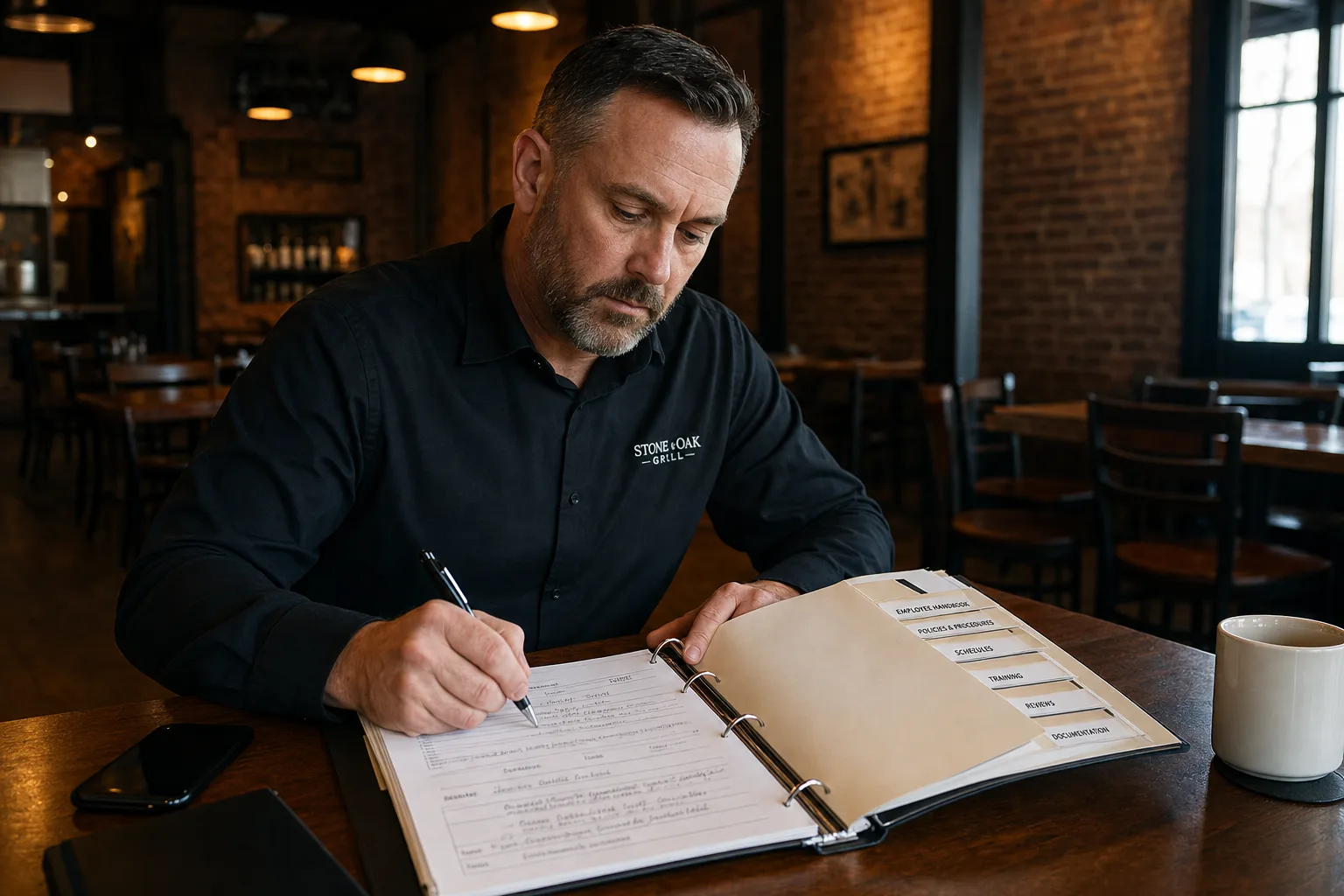
How to Build a Defensible Employee Record
A defensible employee record needs five record types, FACT language, and progressive discipline—not a full drawer. Build audit-ready files operators use.
4 min read · September 2026
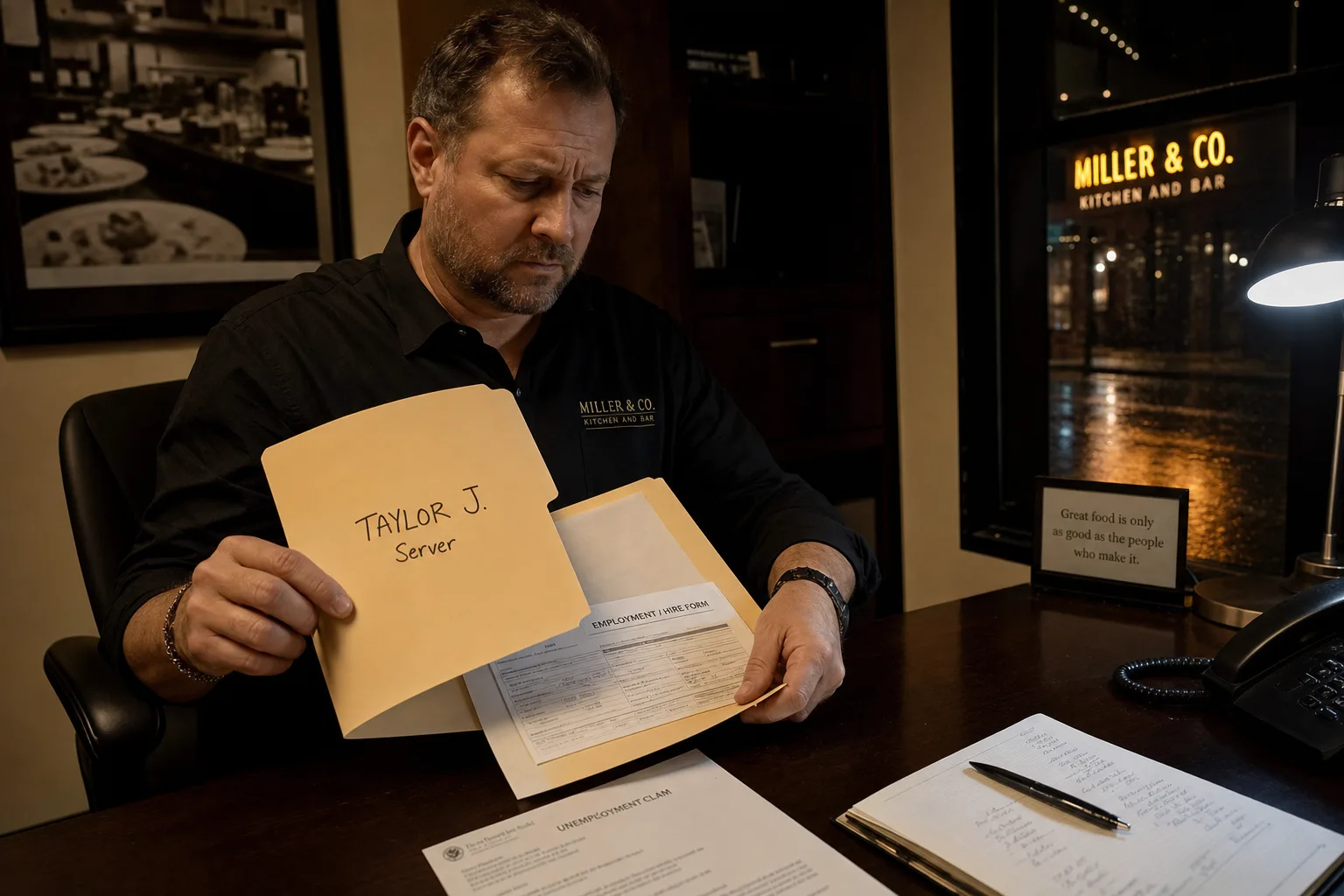
How Much Does an Unemployment Claim Cost an Employer?
Does an unemployment claim cost the employer? Yes. See the unemployment claim cost to employer—UI charges, SUTA rate hikes, and a free by-state calculator.
10 min read · September 2026
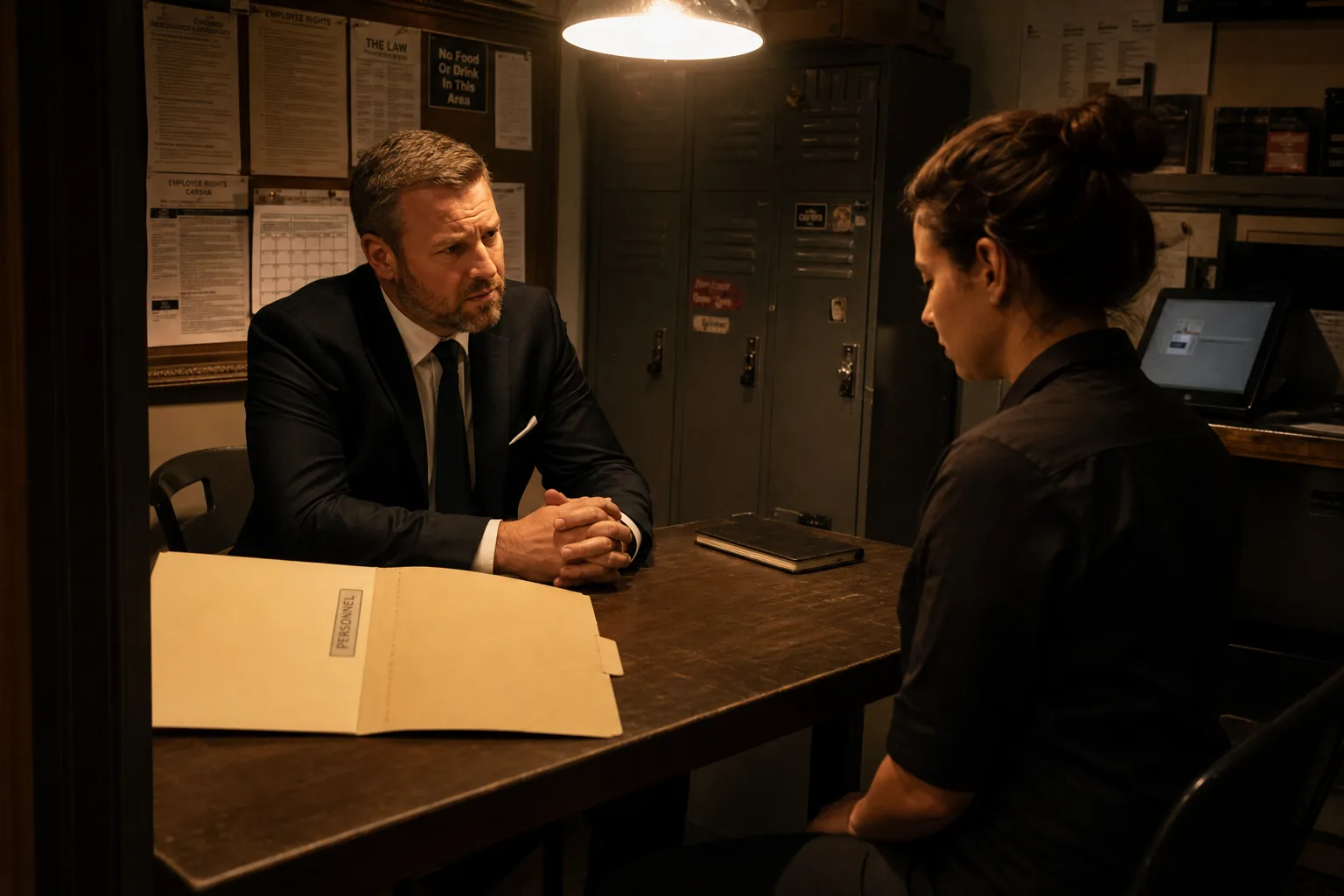
The Documentation Gap That Creates Wrongful Termination Risk
Informal warnings with no file create wrongful termination and constructive discharge exposure. Close the gap with progressive discipline that holds up.
5 min read · September 2026
How Restaurants Lose Unemployment Claims Due to Poor Documentation
Restaurants lose UI claims when they cannot prove misconduct with dated records—not when they lack a lawyer. Build the documentation pack hearings require.
5 min read · September 2026

The True Cost of Missing Employee Documentation
Empty employee files cost UI tax hikes, legal fees, manager hours, and turnover—not just 'HR hassle.' See the real dollars operators leave on the table.
5 min read · September 2026